Feb 2021 — Jan 2022 · Operations Associate · Berlin (nationwide)
Scaling Operations at Wolt
Operations Associate · Service operations & gear operations
Berlin office · Wolt Germany, 6 markets
Two operational systems built with the same method — service demand structuring and gear circularity — during Wolt's Berlin growth phase. From the courier's side they were different problems. From the operations side they were the same one: unstructured demand entering a single physical channel, with no categorization and no clear ownership behind it.
01 · The office as system
One role, two operational surfaces.
During Wolt's Berlin scaling phase, a significant part of the courier workforce was managed directly by the company. The relationship extended far beyond delivery operations — couriers needed support throughout their lifecycle: onboarding, documentation, contracts, gear, payroll, vacation, HR-related issues.
Much of this happened at the Wolt office. My role — Operations Associate — sat at the intersection of two operational surfaces simultaneously.
- Service operations. Handling courier support demand as it arrived at the office.
- Gear operations. Managing equipment distribution, recovery and refurbishment for the courier base.
Both surfaces were connected. Every courier interaction was also a potential gear moment. Every gear distribution was also an information exchange. But they were treated as separate workflows without shared operational structure.
Starting volume
At the initial volume — approximately 5 couriers per hour, across 3 agents, 7 hours per day, 5 days per week — the office was processing around 525 courier interactions weekly.
- ~5 couriers / hour
- 3 agents · 7 h / day
- 5 days / week
- ~525 interactions / week
Enough volume to strain capacity. Not enough structure to plan for it.
02 · Making the invisible visible
Categorizing 525 interactions a week.
The first problem was measurement. Different types of requests entered through the same physical channel regardless of whether they required in-person interaction. Scheduled onboarding could happen alongside urgent payroll escalations. Gear distribution alongside general HR questions.
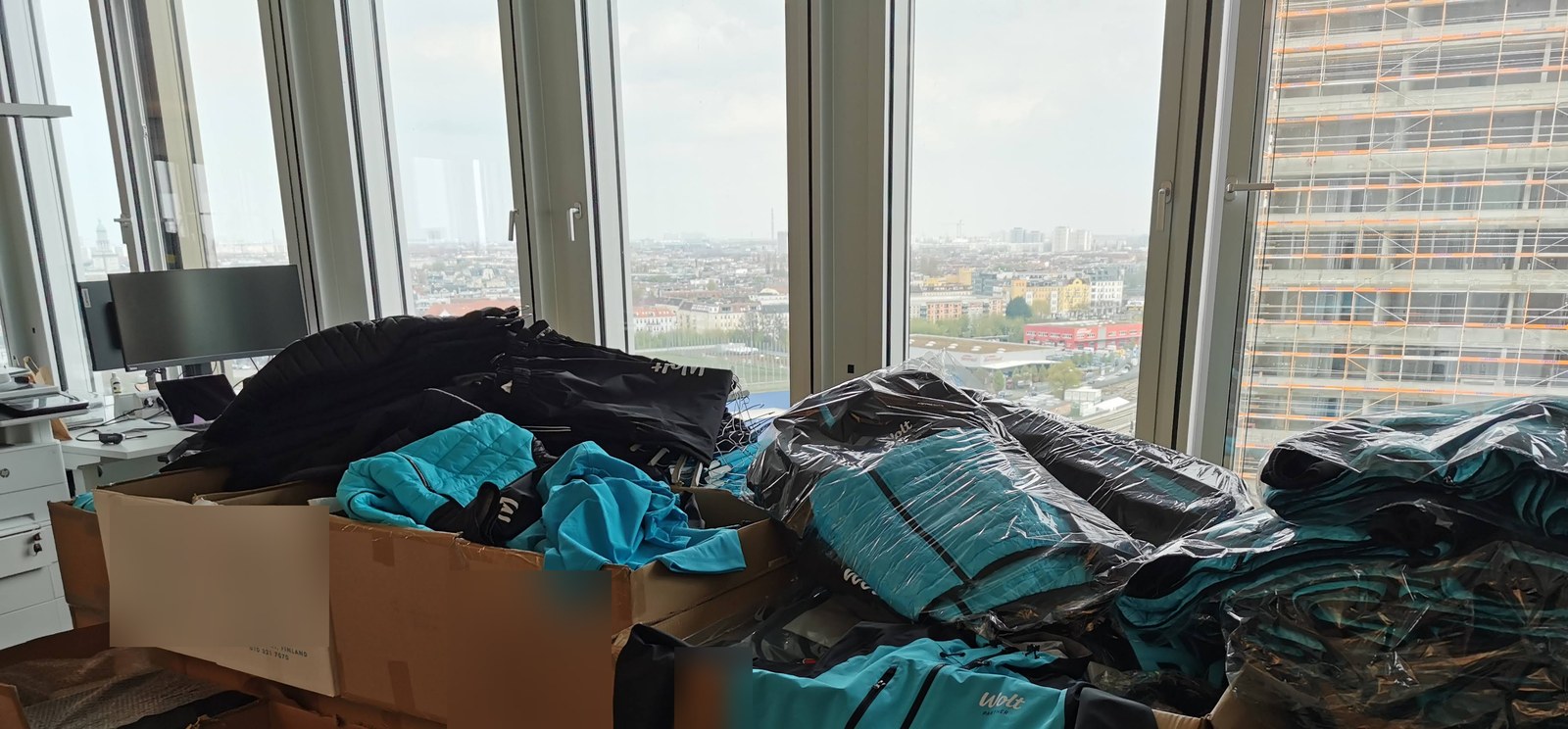
We started systematically categorizing courier visits. Rather than treating each interaction as an isolated support case, we recorded the purpose behind the visit.
The visit taxonomy
Payroll HR / employment questions Vacation Contracts Missing documentation Onboarding Gear — distribution, returns, damage Urgent escalations Other operational requests
Weekly monitoring consolidated into monthly reporting. That gave Operations something previously lacking: visibility into why couriers were using the physical support channel — and what percentage was actually resolvable in-person vs routable elsewhere.
The same categorization discipline that surfaced support patterns also surfaced gear patterns: which equipment was returned in what condition, which items reached end-of-life fastest, which distribution moments coincided with high-volume support hours. Both dimensions became visible through the same operational data.
03 · Two problems, one method
Data → categorization → routing → redesign.
Once demand was visible, both operational surfaces revealed the same underlying pattern: unstructured demand entering through one physical channel, symptoms of upstream problems, and no clear ownership boundaries between what Operations owned vs what other teams owned.
The methodology that worked for one applied to the other.
- Data collection at every touchpoint.
- Categorization of recurring patterns.
- Attribution of ownership per category.
- Routing to the appropriate resolution channel.
- System redesign to reduce dependency on ad-hoc walk-ins.
The methodology loop
Five steps that turn a queue of individual cases into a system that shrinks its own input.
The loop closes on itself: the redesign changes what the next measurement sees, so the baseline moves and the categories re-rank. Applied to service it produced appointments and routing; applied to gear it produced recovery and refurbishment. Same sequence, different output.
This became the operating principle across both service and gear:
Support the courier where support adds value. Own the process where ownership belongs to Operations. Route everything else to the team that actually owns the underlying issue.
04 · The support system
From walk-in chaos to service architecture.
For service operations, the redesign moved courier support from reactive to structured — not by adding capacity at the counter, but by reducing what had to reach the counter at all.
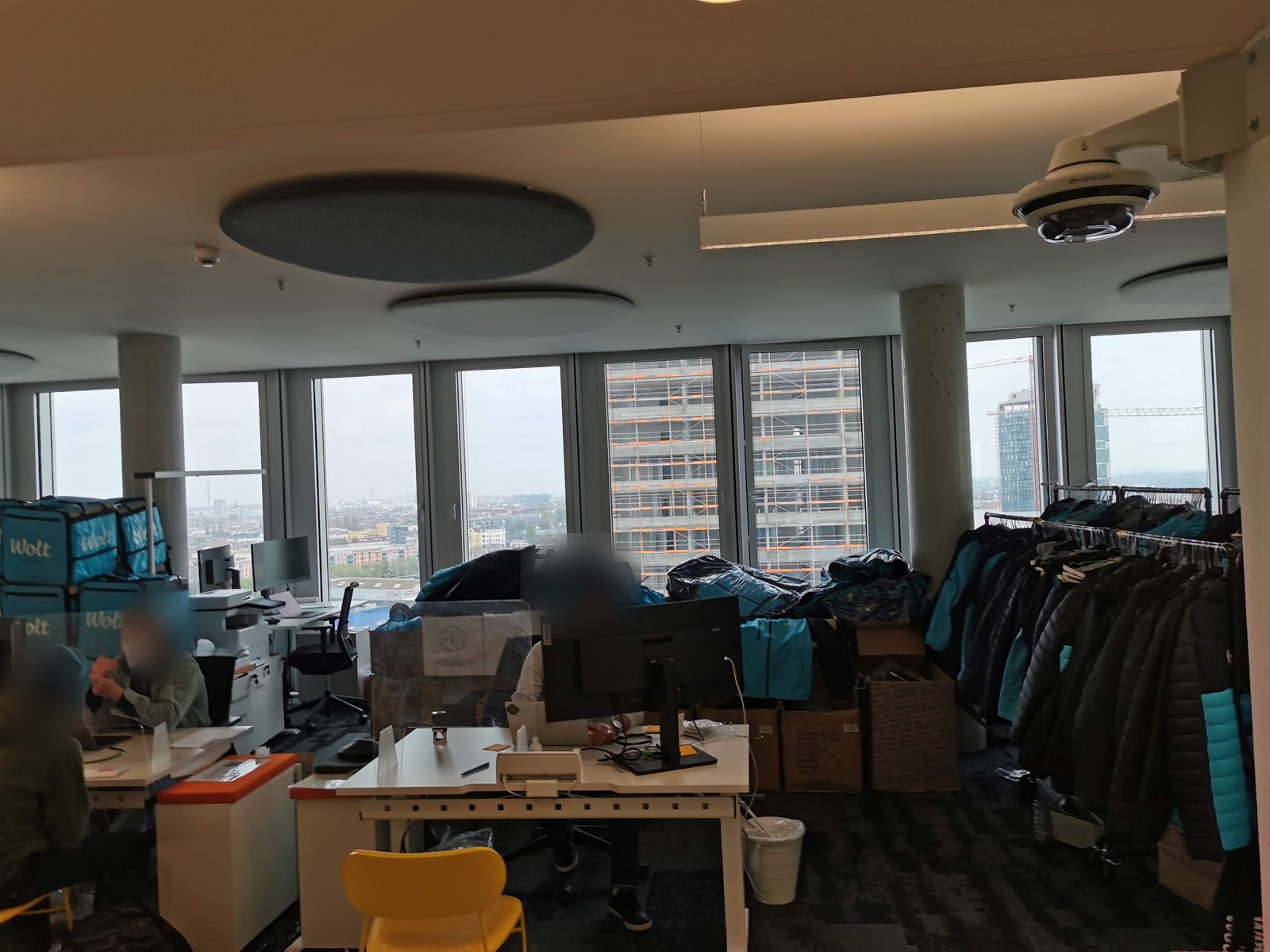
- Structured appointment management with categorized appointment types.
- Self-service materials: FAQs, in-app guidance and chatbot flows for recurring questions.
- Clearer channel routing: which issues went to Support, which to HR, which to Payroll.
- In-person support reserved for cases that genuinely required it.
- Weekly reporting escalating recurring bottlenecks to the teams that owned them.
Supporting is not owning
One of the sharpest distinctions this project surfaced was between supporting and owning.
A courier waiting several days for a payroll issue could arrive at the office frustrated. Because they were physically present, Operations naturally helped escalate. But resolving payroll was not an Operations responsibility. Our reporting made that distinction visible — helping route accountability to the teams that actually owned each recurring category, instead of absorbing everything at the office.
The new support journey
A problem no longer starts at the office door. The office became the exception, not the entry point.
- Self-service where possible. FAQs, in-app guidance and chatbot flows for the questions that repeat.
- Correct digital channel. Routed by category, not by whoever answered first.
- Categorized appointment when necessary. Scheduled, with the right person and the right documents ready.
- In-person for exceptional cases. Reserved for what genuinely needs a person and a counter.
- Escalation to the responsible function. For the underlying issue behind the recurring category.
Two responsibilities anchored my ownership in this system: I independently took over onboarding and offboarding of couriers in the Berlin office, and I coordinated a small team of Gear Associates — as documented in the Wolt reference letter.
05 · The gear system
From consumable to circular.
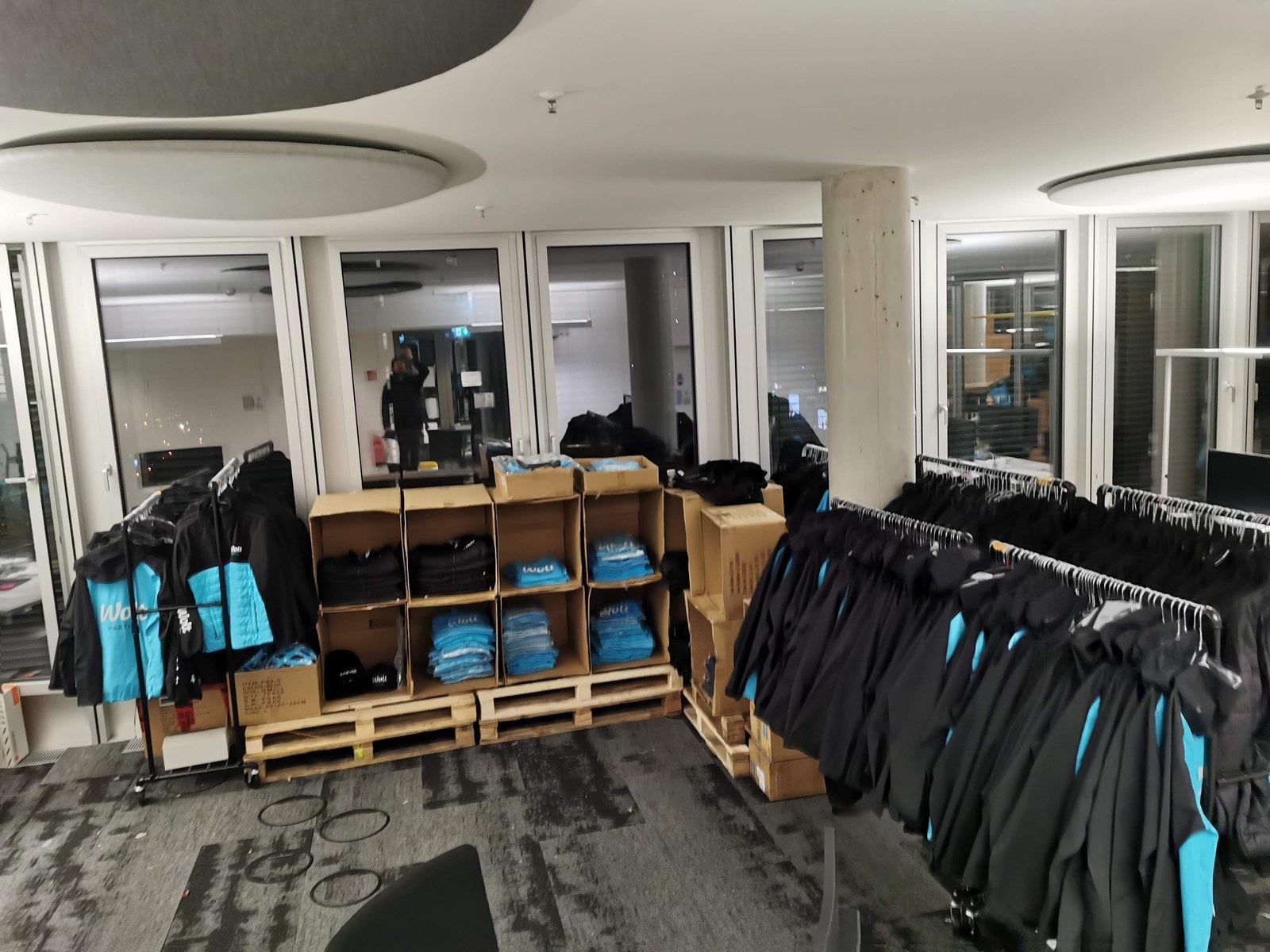
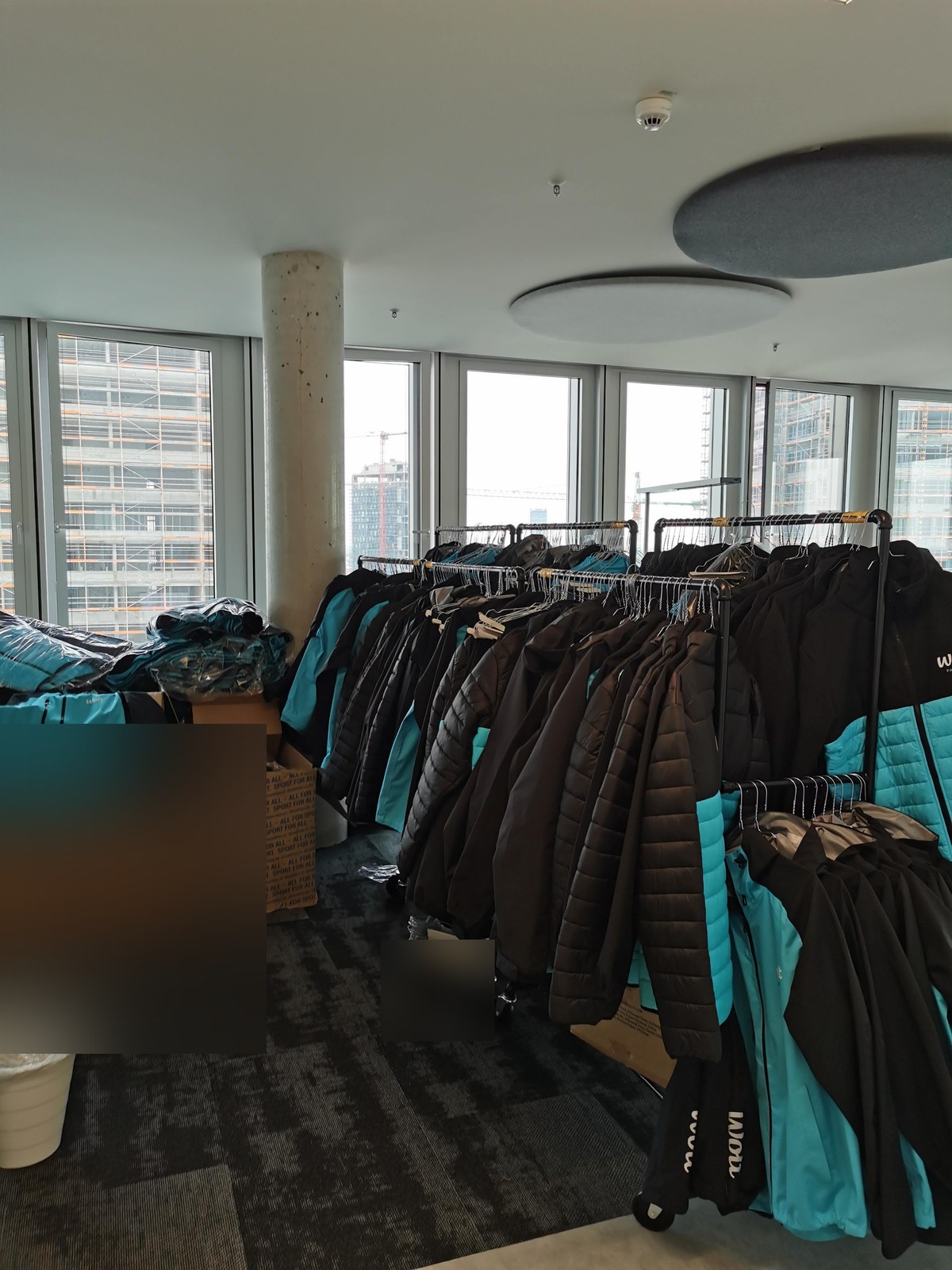
For gear operations, the same measurement discipline surfaced a different problem: equipment was single-use by default. Every new hire received a full gear kit — thermal bags, weatherproof jackets, thermal boxes — imported from overseas manufacturers and distributed across Germany. Departing couriers kept theirs. The cost curve tracked hires and turnover, not active courier count.
Three systemic gaps in the gear lifecycle
- No structured recovery at offboarding. Departing couriers walked away with their gear. No return channel, no accountability, no incentive to bring it back.
- No financial mechanism to enforce return. Missing gear generated no visible cost signal — neither to the courier nor to the company.
- No downstream path for damaged gear. Even when items came back, worn or irreparable pieces had no recycling channel. They went to landfill.
The redesign moved the gear lifecycle from linear to circular.
- Structured gear recovery at offboarding, integrated into the offboarding checklist.
- Financial accountability. Missing items charged to the courier at offboarding — a behaviour-change mechanism, not a revenue generator.
- Warehouse refurbishment at the Berlin office. Intake workflow, condition assessment, cleaning and minor repair, and a re-issue pool for new hires.
- Downstream recycling. Irreparable gear routed to Wolt HQ Denmark via the existing partnership with TARPREC, which processes bags and heating plates in Tørring for material recovery: bags and equipment are shipped and dismantled, and up to 96% of materials are diverted from landfill and repurposed into products such as road signs and stuffing, as documented in Wolt's global sustainability communications.
The loop, drawn
Four stages that keep gear inside the system, and one downstream route for what cannot be saved.
Procurement stops being the engine of the system and becomes its residual input: new units are bought only for the demand the returned pool cannot cover. Everything the lime path touches is equipment that was already paid for once.
Carbon footprint quantification
The program's environmental effect was calculated rather than asserted, so it could be published externally and audited against the material flows it described. That calculation is what turned an internal cost programme into a reportable sustainability contribution, feeding into Wolt's broader sustainability reporting.
Gear that leaves with a courier is not a logistics problem. It is a design decision nobody made on purpose.
06 · What moved
Two outcomes, one methodology, honest attribution.
Attribution matters more than headline numbers.
The 50% reduction in weekly support demand was not caused exclusively by the service redesign. Wolt's introduction of external fleet owners during the period reduced the pool of directly-managed couriers, which mechanically reduced walk-in volume. The service design changes contributed to the shift — but so did operating model decisions I did not own.
The 30% procurement cost reduction is more directly attributable to the gear redesign, comparing baseline vs post-implementation 12-month periods.
Both outcomes are validated in the Wolt reference letter. The gear program's environmental contribution — quantified for external publication — fed into Wolt's broader sustainability reporting, contributing to the 25,000+ kg of material diverted from landfill via TARPREC across Wolt's European operations (source: Wolt Blog, October 2023).
07 · What I learned
One method, two systems.
The strongest lesson from this role was structural: two operational surfaces that looked completely different from the courier's perspective — needing support for a payroll issue vs returning a damaged bag — were the same problem from the operations perspective.
Both were symptoms of demand entering the physical channel without categorization. Both benefited from the same discipline.
- Measure before optimizing.
- Categorize before routing.
- Attribute ownership before designing intervention.
- Design for exceptions, not for defaults.
That is not customer support methodology or supply chain methodology. It is operations methodology. Applied to service, it reduces walk-in dependency and clarifies cross-functional accountability. Applied to gear, it turns consumables into circular systems and decouples cost from turnover.
Fifty people asking the same question
Another lesson worth naming: repeated support requests are often not primarily a Customer Support problem. They can be evidence of a process, information or ownership problem upstream. If fifty people ask the same question, answering it fifty times may be necessary — but it does not solve the underlying issue. The more scalable intervention is to understand why they are asking, where the information should exist, and which team owns the underlying problem.
Not case-by-case handling. System-level redesign around recurring user needs.
External validation
Reference letter and published sources
Both outcomes are documented in the Wolt reference letter, available via the Certificates section of this portfolio. Selected accomplishments confirmed by the letter:
“He led the project of cleaning the couriers' work clothes to reduce Wolt's costs by more than 30%.”
“He took responsibility for a nationwide recycling project to reduce Wolt's carbon footprint.”
“He independently took over the onboarding and offboarding of couriers in our local office in Berlin and coordinated a small team of Gear Associates.”
“He demonstrated his strong analytical skills in supporting the team leader through data-driven analysis and the preparation of weekly reports.”
External validation of the gear program's environmental impact appears in Wolt's global sustainability communications: 25,000+ kg of material diverted from landfill via TARPREC across Wolt's European operations (Wolt Blog, October 2023).
The team
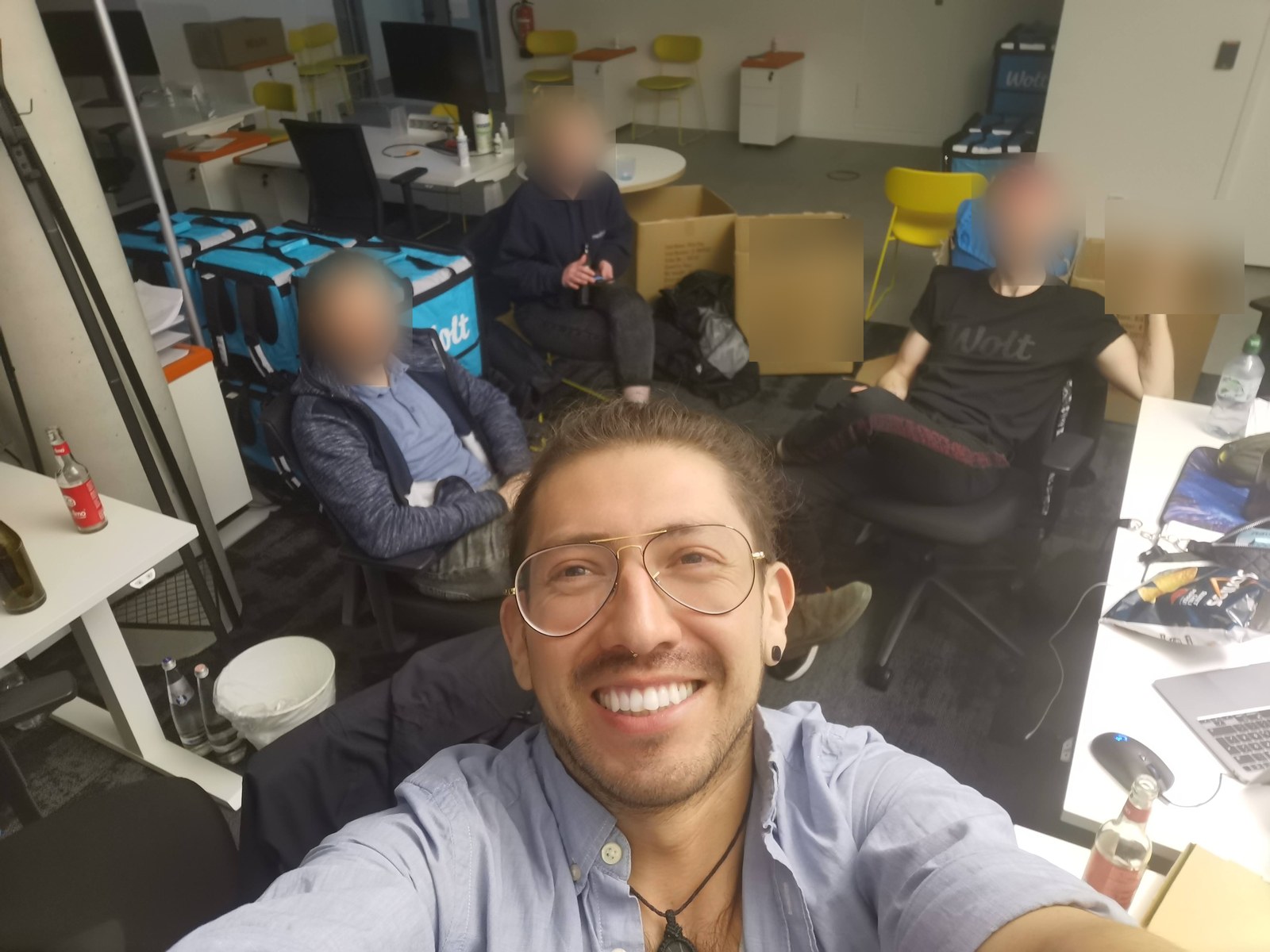
On the figures and photographs
This case study describes work carried out at Wolt Germany as Operations Associate in Berlin (Feb 2021 — Jan 2022). It is written from my own scope of work, and it is deliberate about which numbers come from where.
- Photographs are mine, from the Berlin office. Faces and personal details are redacted in every frame.
- The diagrams were drawn for this case study. They are models of the method and the lifecycle, not reproductions of internal documents.
- The support-demand figure is approximate and shared. The ~525 → ~262 weekly interactions range is an operational estimate from the period's reporting, and the reduction is attributable to the service redesign and to Wolt's shift toward external fleet owners — a change I did not own.
- The procurement comparison extends past the role. The 30% figure compares Feb 2021 – Jan 2022 against the post-implementation window Feb 2022 – Jan 2023.
- Downstream recycling figures are public. The TARPREC partnership, the 96% material-diversion rate and the 25,000+ kg recovery figure come from Wolt's published communications, and describe Wolt's European operations — not this program alone.
- No internal financials. Absolute procurement values, unit costs and commercial terms are left out; the 30% reduction is stated as a relative change only.